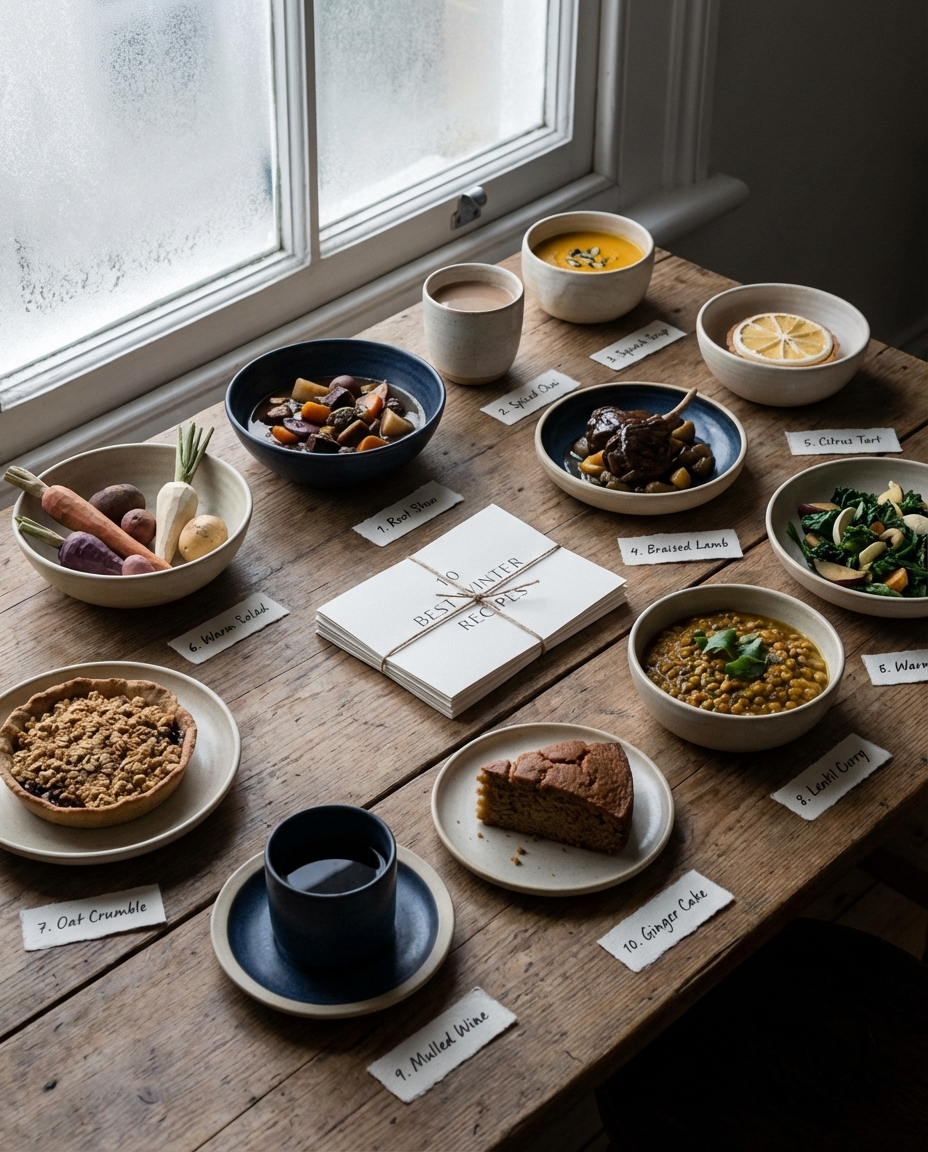
When the temperature drops and the frost begins to settle on the windowpane, the culinary focus shifts from fresh and crisp to slow and sustained. In our Ultimate Guide to 10 best winter recipies, we established that winter cooking is about more than just caloric intake; it is about thermal regulation and emotional grounding. This chapter focuses on the most elemental of these methods: the soup pot.
There is a specific architecture to a hearty stew. It requires a foundation of aromatics, a structure of protein or dense fibers, and the binding agent of a rich, complex broth. Unlike summer salads, these dishes improve with time, allowing heat to extract flavor compounds from woody herbs and root vegetables.
The Science of the Simmer: Beef & Game Stews
To create a stew that truly qualifies as "hearty," one must understand the breakdown of collagen. Tougher cuts of meat, such as chuck roast or shank, are rich in connective tissue. Under rapid, high heat, these tough fibers contract and become chewy. However, in a low-temperature, liquid environment over several hours, that collagen gelatinizes.
This process not only tenderizes the meat but also thickens the cooking liquid, resulting in that velvety mouthfeel that distinguishes a stew from a soup. For the best results, always sear your proteins first. The brown crust formed is the result of the Maillard reaction, introducing nutty, savory notes that boiling water alone cannot achieve.
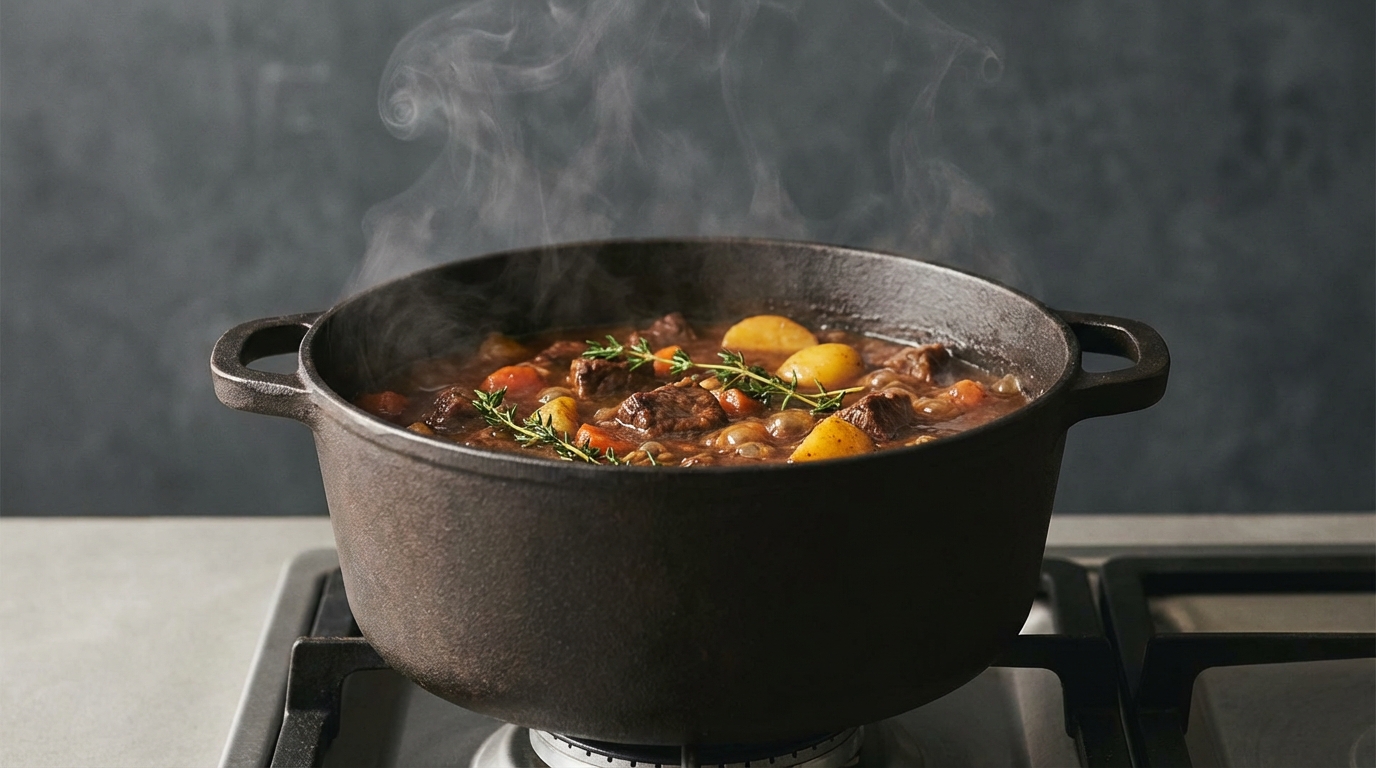
Once your protein is set, introduce the "earth elements." Carrots, parsnips, and potatoes are staples for a reason—they hold their structural integrity during long cooks. If you enjoy the roasted elements of our Comforting Winter Casseroles, you will find that transferring those same root vegetables into a liquid medium creates a softer, more cohesive flavor profile.
Velvet Textures: Creamy Vegetable Emulsions
Not all hearty meals require meat. The density of winter produce allows for vegetarian soups that are incredibly filling. The key here is emulsification. Ingredients like butternut squash, sweet potato, and cauliflower can be roasted to concentrate their sugars and then blended into a smooth puree.
To elevate a simple vegetable soup into a "cold night" staple, incorporate fats and spices that trigger warmth. A dash of heavy cream, coconut milk, or even a swirl of olive oil adds satiety.
- Butternut Squash & Sage: Roasting the squash first adds a caramel note that balances the savory herbs.
- Potato Leek: Use starchy potatoes (like Russets) for a naturally thick soup without needing flour.
- Roasted Tomato & Basil: A darker, richer version of the summer classic, best made with oven-roasted plum tomatoes.

The Broth Spectrum: Bone vs. Vegetable
The viscosity of your liquid determines the character of the dish. Bone broth, simmered for 12 to 24 hours, is packed with minerals and creates a lip-smacking richness. It is the preferred base for restorative soups intended to fight off winter colds.
Vegetable stocks, conversely, should be simmered for shorter periods (45 minutes to an hour) to keep the flavors bright rather than muddy. A good trick for a darker, deeper vegetable stock is to leave the skins on your onions and roast your mushrooms before adding water.
Pairing Dynamics
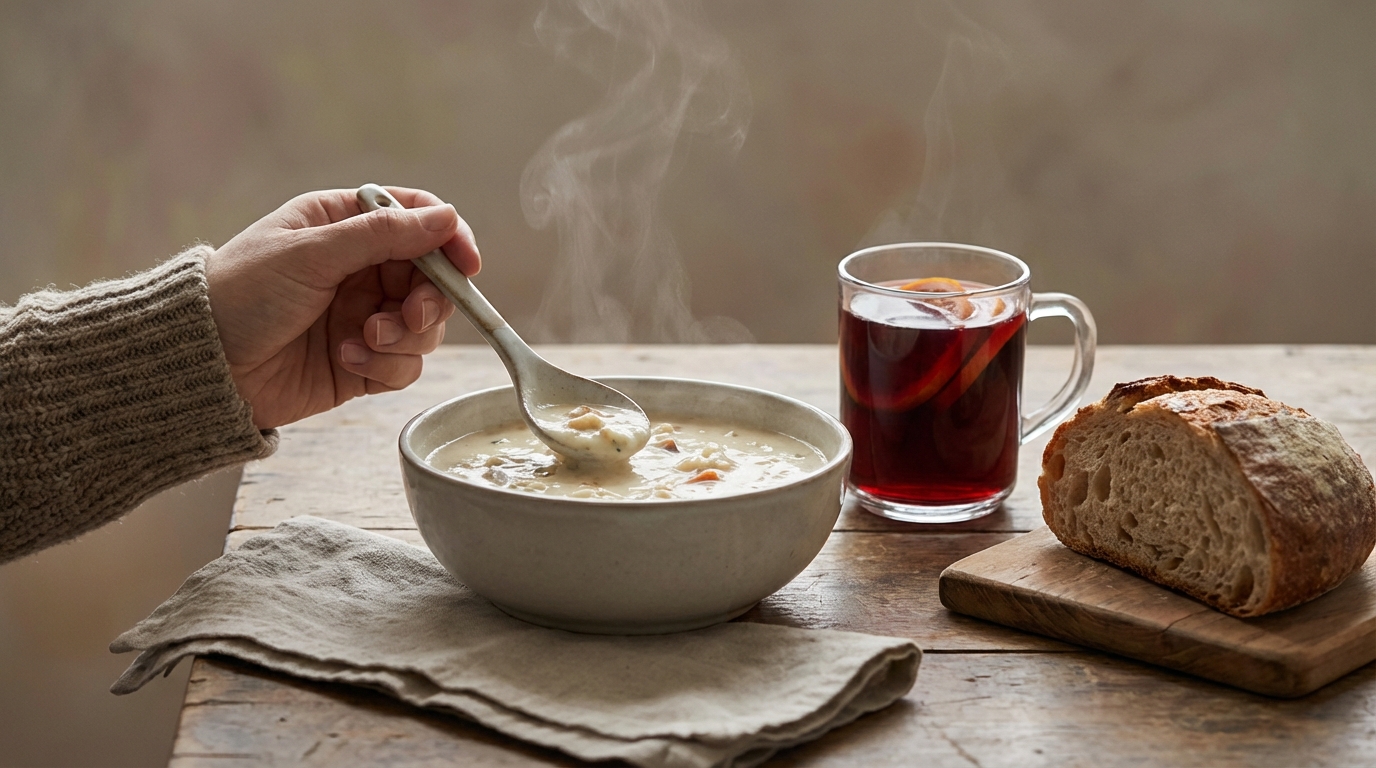
No bowl of soup exists in a vacuum. The experience is completed by what accompanies it. A crusty sourdough or a dense rye bread is essential for "sopping up" the remnants of a good stew.
Beverage pairing also plays a crucial role in maintaining the thermal envelope. While water is functional, we recommend exploring Warm Winter Drinks & Toddies. A spiced cider pairs exceptionally well with pork stews, while a heavy red wine or a hot toddy complements beef dishes.
Conclusion
Whether you are deploying a slow cooker to prepare dinner while you work, or standing over a stove stirring a risotto-style soup, the objective remains the same: efficient, delicious heat. These recipes are designed to be forgiving, allowing you to adjust ratios based on what is in your pantry.
Once the savory course is complete, do not let the comfort end there. Transition into the evening with our curated selection of Seasonal Winter Desserts, featuring spices like cinnamon and nutmeg that echo the warmth of your main course.